Polarised plastic

My turn to hop on the polarised-photos bandwagon.

Polarised plastic cups

An LCD monitor is an excellent source of polarised light, and lots of see-through things also polarise light to different degrees as it passes through different parts of them. For this reason, you'll see faint rainbows around the edges of various clear plastic things if you hold them up in front of a plain white LCD screen. Put a second polariser over your eyes or camera lens, though, and things get trippy.

(If you see someone looking at an LCD through polarised sunglasses and doing the Indian head wiggle, that person is not necessarily on drugs.)

When a local discount store was closing down, I seized the opportunity to buy a lifetime supply of little plastic shot glasses. It struck me that they might be good for mixing glue, holding small parts, reenacting the drinking contest scene from Raiders, et cetera. They are also good candidates for polariser photography, especially if you stick a few of them together.

One day, I'll get around to making a cup sphere, in which you glue or staple disposable cups together to make a globe. Stapled paper cups are probably the fastest way to do it. I've got a lot of magnets here, though, so I decided to try sticking the little shot glasses together temporarily with those.

Polarised plastic cups - rear view

I got 24 cups together before the process started becoming really difficult, with the structure shifting around and magnets snapping onto each other and the wailing and the cursing, glayven.

More sterling technology journalism

Regarding the widely reported "new discovery" of "WiTricity", wireless electricity transmission, as mentioned in Austenite's comment the other day:

Bollocks.

The people at MIT who came up with this "new invention" would be the first to tell you that the basic technology involved in it isn't new at all. It's just an electrical transformer with a large air gap between the primary and secondary coils. This, inescapably, means its efficiency gets worse the further away the receiving device moves, and it wastes energy heating up conductive things in the area.

I'm sure that the MIT research is doing clever things with the control and detection systems; it may even result in real useful products some time quite soon. It's quite possible that at some point in the future we will indeed have charging pads we can put various devices on to be inductively recharged. The same goes for the bigger versions envisaged by the WiTricity idea, where a laptop will work without a power connection anywhere in a room; to make that work, you'll probably have to build your primary coils into the very walls of the room.

It's not even out of the question that such an arrangement could be used to power transportation systems, though we'd need to start making our cars out of plastic before it'd be workable.

The reason for this is tied to the main problem with these sorts of systems, which are proposed about twice a year by some crank who thinks he's the one who can do what Tesla didn't. The problem is that if you put a conductive loop in the field, like a wristwatch with a metal band, it'll eat most of the power output and get hotter and hotter. It's that problem which I presume the MIT researchers are working on, though it's hard to figure that out from the press coverage.

That big problem, plus the crippling loss of efficiency as your secondary coil(s) get further away from the primary, is why inductive/magnetic "wireless electricity" for powering normal appliances, streetlights and most other straightforward everyday things still seems to be a complete non-starter.

(As usually happens when a subject that's covered in first-year Electrical Engineering comes to the attention of the masses, there's a decent Slashdot thread about all this. I've also written about inductive chargers before, here and here.)

I'm looking forward to some really dumb mutations of this idea over the next few weeks. Given the well-established inability of the "electrosensitive" crowd to tell the difference between milliwatt radio waves and ionising radiation, the notion of "electricity beams" popping up all over the place should make them go absolutely spare.

If we can't make these idiots see sense, we should at least attempt to gain as much amusement from them as we can.

ThinkQuack

ThinkGeek, pricey but slick purveyors of gadgets, T-shirts and caffeinated candy to the nerdly masses, are now selling the Dreamate Sleep Inducer.

Said Inducer is alleged to use acupressure principles to make you sleep better. It does this by massaging three points on the inside of your left wrist.

So far as I can determine, there is not the slightest reason to suppose that this will do any good at all.

Acupuncture and acupressure "points" have no physical reality - they cannot be told from other nearby locations on the skin in any way. Many equally-successful practitioners have completely different ideas about what points should be needled, pressed, heated or lit up with laser pointers (seriously!) to achieve the numerous amazing outcomes they allege are common, but strangely cannot demonstrate in controlled circumstances.

As far as wrist stimulation to achieve some beneficial goal goes, there's weak evidence that wrist zappers or buzzers can help some people sometimes with some kinds of nausea. See this study, for instance; it concluded that some wristband gadgets were of some use against seasickness, sometimes. But there are also plenty like this study, which concluded such gadgets were no use at all for nausea after cardiac surgery.

(I explored the plausibility of the actual commercial "nausea-fighting" electrical wristbands back in this letters column.)

I don't know where the claims about better sleep came from, though. Those claims have been around for a while, as part of a fuzzy constellation that includes other claims about how wrist acupressure also prevents snoring. And there are, of course, tons of people selling wristbands to treat all sorts of conditions, not that that means anything.

As far as evidence goes, though, there is amazingly little.

If you do a PubMed search of the vast Medline database for any crazy thing, you're pretty much guaranteed to get a few lousy studies from crooked journals, and a scattering of letters-to-the-editor from cranks. As I write this, "astrology" gets 245 Medline hits.

Search for "wrist acupressure sleep", though, and you get nothing.

There are only twelve hits for "acupressure sleep", and the ones that actually talk about acupressure treatment for sleep are unanimous in concluding that you need to rub (or puncture) the patient's ears, not their wrists, to get any effect.

So congratulations, ThinkGeek. You're selling something so ridiculous that even the loonies don't think it works.

And now, irresponsible mayhem

[UPDATE: That video's dead now. I found some more, though; they're here!]

If they didn't want you to do this, they wouldn't put those handy connectors on the batteries, would they?

(I think the experimenter bought his Science Spatula from the same place where I got my Science Nails.)

I count a total of 125 9V batteries there, for 1,125 nominal volts. And yes, as I've mentioned before, you certainly can kill yourself stone dead by doing this.

(Incidentally, people today use clicked-together 9V batteries to replace the no-longer-available B batteries for vintage valve radios.)

A while ago, I had a harebrained scheme to use 9V batteries to make a 110V-ish DC source (in this 230VAC country) to get that elusive green oxide coating on some titanium.

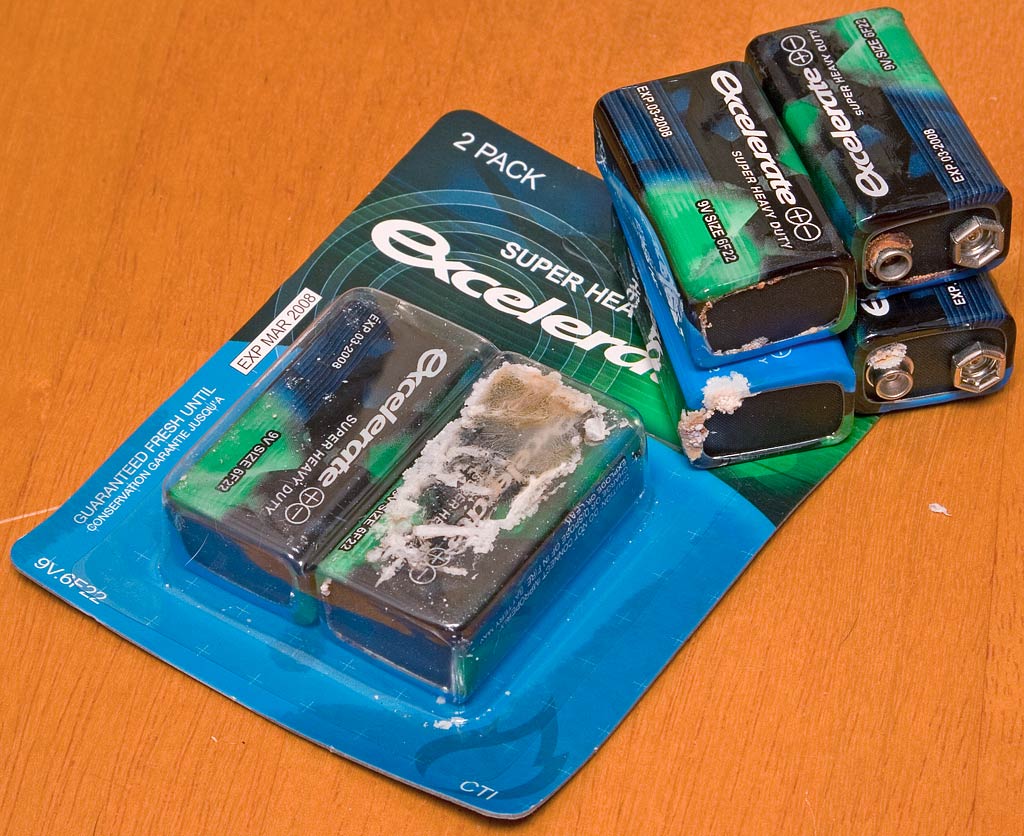
Grody batteries

Unfortunately, the super-cheap eBay dealer I chose sent me the nastiest batch of nine volters I've ever witnessed (and, yes, he then refunded my money), so that plan to kill myself fell by the wayside.

Now, though, I've got a Variac and a bridge rectifier. What could possibly go wrong?

Talk crap for money! It's easy!


$10 Police Flashlight Hack! - video powered by Metacafe

There's some insight and a considerable amount of confusion in the LifeHacker thread about this video, so rather than tack a wordy comment onto the end, I decided to post about it here. And then it sort of snowballed. But first, the flashlight thing.

Yes, you can relatively easily upgrade cheap flashlights with a higher voltage battery pack and a cheap bulb to match. Grab any old Maglite clone, install 12 volts worth of cordless-drill NiCds and a 50 watt halogen downlight globe (or more), and you're in business (not much run time, but feel the brightness!). CandlePowerForums is an excellent place to kick off your new obsession with flashlights (or it would be, if it weren't down at the moment).

This particular project, though, isn't a good idea.

One commenter observed that the flashlight might melt, but I wouldn't worry too much about that; I reckon running a bulb meant for six volts from three CR123s will burn it out long before it manages to make the plastic smell funny. You're pushing the bulb to something approaching twice its rated wattage - filament lamps increase in resistance as the filament heats, so you can't do a simple V=IR calculation for higher input voltage, but the difference isn't huge over normal working power ranges. Double power will absolutely murder the poor little thing.

Surefire, in contrast, rate their filament lamps for 30 hours of life, and it's hard to find anybody who's had one blow that soon, even if they drop their light, hit things with it, or screw it onto a frequently-used firearm.

(Normal flashlight bulbs do not like being shocked while they're operating, as anybody who's ever hammered on a tyre iron with their 6-D Maglite and killed both the working bulb and the foam-padded spare will know. The Radio Shack bulb is rated for 15 hours, but that doesn't include dropping the flashlight. LED lamps, in contrast, are rather more shockproof than many other components of a flashlight.)

I'd be very surprised if the bulb in this "overclocked" flashlight lasted 30 minutes. 30 seconds would not be out of the question, with fresh CR123s.

But then, as I'd reached the above point in the writing of this post, I noticed that a couple of commenters on the Lifehacker thread said they'd done the hack and it worked fine.

So I decided to give it the benefit of the doubt. Maybe that Radio Shack bulb is just unusually strong?

Then, though, I clicked through to the Metacafe page for the video in question. And discovered that it had by that point earned (according to the Metacafe money-for-popular-videos system; I believe the origin of this money involves underpants gnomes) its creator nine hundred and fifty-six American dollars.

And it's not "Kipkay"'s biggest earner, either.

Even then, I could have let it go; it's not as if the guy's stealing from orphans, and what the hey, the trick may work.

But then I looked at some of Kipkay's other videos.


DVD Player Hack! - Click here for the most popular videos

The sum total of the useful information in this one, for instance, can be boiled down to one URL. But it's still made Kip $935 to date!


Trace Any IP Address Or Website! - Click here for more free videos

More than thirteen hundred bucks, for this one.

Let's ignore "the name of the IP address", Kip's instruction to use tracert when ping will do the same job, and the fact that at first glance he appears to be cool with the idea that the White House is in Boston. The major point is that geographic IP address locating cannot ever be more than vaguely accurate.

The site Kip suggests does its best, but it still confidently puts me 94 kilometres by road from where I actually live. It places the White House's IP address somewhere near the corner of P Street and 8th in Washington DC. That's only about a kilometre off, but the effective range of my RPG-7 is quite a lot less than that, Kip! Gimme information I can use!

Kip's got plenty of videos that're perfectly genuine, plus others like this one ($665!) that're borderline enough not to matter.


Make Traffic Lights Change!! Amazing! - Click here for this week’s top video clips

And this ($765!), while a complete and unexpurgated lie and probably plagiarised, could be classed as a harmless prank since it just gives people something to do while they wait for the lights to change.

And this one...


Potatoes Power My MP3 Player! Amazing! - Free videos are just a click away

...could be taken as a lame attempt to imitate the far more stylish (and, I think, rather less profitable) Mark Erickson, who, in case you're wondering, is not the same person as Kip.

(I still, however, think Kip should suffer one disfiguring skin ailment for every child who tries to build this potato battery and is left disappointed by Kip's lies.)

If I were very charitable I could even give Kip a pass for calling this...


Cool Ball Bearing Rocket! - These bloopers are hilarious

..."a new trick with ball bearings and magnets", despite the fact that the 2002-vintage scitoys.com page for the exact same thing has for ages been the number one hit in a Google search for "gauss gun" (which, yes, should technically be a coil gun, but never mind).

(Kip also rips off a #1-hit Science Toys page for this video. Oh, and he's not above ripping off Mythbusters, either. And he copies his floppy disk Enterprise from this four-year-old page.)

But then there's this...


HyperMiling! Plus Secret Trick! - A funny movie is a click away

...which starts with sensible tips and then slides into bullshit about acetone, which will absolutely not improve your fuel economy - it's another one of those strange phenomena that seems to happen less and less the better you test to see whether it's happening at all.

But hey, who cares about the hoses and seals in the cars of suckers, when Metacafe will give you twelve hundred bucks for talking crap!

And then there's this:


Does GOD Exist? The Eye... - The best video clips are here

Oh, and I choose my words with care here, for fuck's sake. This one's only made $157 to date, but that's about a million dollars more than this Pascal's Wager of the creation-evolution "debate" is currently worth.

(What's with the "100 years of [unspecified] Cray time" part, you might be wondering? That's because Kip can't even come up with his own Creationist claptrap, so what he's reading here was originally published in Byte magazine in nineteen eighty-five, and presumably republished without permission in some pamphlet Kip's pastor gave him.)

Getting back to nerdly topics, check out this one, billed as "You've seen it all over the internet but this is the original version!":


9 Volt Battery Hack! You'll Be Suprised... - The best free videos are right here

Well, OK, when I mentioned it in 2001 I didn't actually say that this was an emergency AAA-equivalent source. But I didn't pretend to have invented the idea, either.

I realise this isn't exactly an Ebert-versus-Schneider-level put-down. All Kip's doing is taking Metacafe's money for making videos for which people vote with their clicks. And it's not as if I'm starving in a garret or something; I for one would take Kip's money with a smile on my face and a song in my heart, but I don't need it.

But it's just so dispiriting.

I know that out in the real world the people who fix their eyes on the prize and do what's necessary to get it, bugger the consequences, are always the ones who end up sleeping like babies on mattresses stuffed with money. I get that. But I thought things might be just a little fairer here in the Internet fantasyland.

There are lots of super-cool people out there in the hacking, fabricating and doing-science-at-home communities. They're seldom in it for the money, which is good, because there's seldom anything other than a large negative amount of money in it.

But if you think Kip deserves the money he's made more than, oh, Matthias Wandel, there is something wrong with you.

And don't e-mail me if you do believe Kip deserves the money more, because I already know why you think that. You read books about selling, and you think the boy's got "chutzpah", right?

Bullshit artists with selling skills are Part Of The Problem. They sell expensive credit to poor people, they sell worthless remedies to the sick, they sell wars to whole countries.

The rest of us don't need you people, and I don't care what you learned when you got your degree in marketing.

The world already has an ample supply of bullshit, Kip. Give us all a break and stop adding more.


Another quantum talisman

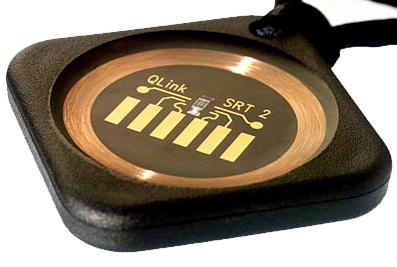
Q-Link pendant

Here, Ben Goldacre talks about what's inside the Q-Link, or possibly Qlink (sellers differ on the spelling) Pendant.

Which contains a bunch of unconnected nothing, as you'd expect.

I've been lucky enough to review three other such magic devices.

EMPower Modulator

The EMPower Modulator is close to the Q-Link Pendant in its nuttiness...

Wine Clip box

...but The Wine Clip is similarly crazy once you get down to its theory of operation.

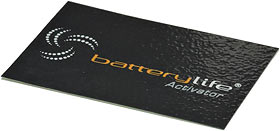
Batterylife Activator

And then, there's the now-defunct Batterylife Activator.

(I'm still waiting for review product from Life Technology.)

How To Make Your Kid Grow Up Like Me

The other day, I realised I could only remember two of the kids' science fiction series that shaped my young mind.

First and foremost, beyond question, were the Danny Dunn books.

I loved them, not least because they made a solid attempt at getting the physics right.

Example.

When people get shrunk to the size of ants in practically any other sci-fi or fantasy story you care to name, they carry on with their lives more or less as normal in their scary new world of bus-sized cockroaches and bean-bag-sized blood cells, or whatever.

Which is wrong, for the same reason that it's wrong that Superman is so often able to take a firm grip of one end of a battleship or something and lift it bodily out of the water.

We can accept that normal physics doesn't apply to Superman himself, just as we can accept that absent-minded Professor Bullfinch in Danny Dunn and the Smallifying Machine has indeed managed to construct the eponymous Machine. But Superman doesn't magically make the battleship as tough as he is just by laying hands on it. The ship is still subject to normal physics, so when Clark grabs and lifts he should end up with two large handfuls of torn steel, and look like an idiot.

(Image Comics did this right at one point, with the new and clueless Mighty Man trying to lift a car by the bumper and, of course, just ripping the bumper off.)

Anyway, when Danny and company get shrunk, they find they can't walk any more. Because, of course, the acceleration due to gravity is still 9.8 metres per second squared, and if you're scaled down to a thousandth of what you were, that now looks like 9.8 kilometres per second squared.

So if you're standing up and tilt slightly forward with the intention of starting to walk, BANG you're on the ground. Just like an ant would be, if it tried to stand on its hind legs.

You suffer no damage, since scaling down makes you tougher in scale terms, but bipedal locomotion is completely out of the question unless your body and consciousness are accelerated by the same factor by which they've been shrunk.

Which, in the Dunn stories and in all of the crappy Incredible Voyage/Honey I Screwed Up The Physics Hollywood versions, they never have been.

So there.

(Warning! This sort of thing can lead to long conversations later in life about the stability of the Ringworld, which is even worse than prolonged Monty Python quoting when you're at a party and should be meeting girls.)

The other sci-fi(ish) series I could remember was Norman Hunter's immortal Professor Branestawm series, which takes a lot more liberties with physics but is plainly doing so in the service of humour. Branestawm is more of a wizard than a professor; he'd be perfectly at home in Unseen University.

(The Branestawm books, or at least the good editions of them, were also illustrated by nobody less than W. Heath Robinson!)

There was another series, though, that I just couldn't pin down. I could remember it featured a family adventuring around the galaxy in an old spaceship, with memory implanting machines to school the kids, and the spaceship needed its engines de-coked in at least one book... nope, no useful search strings arising from those memories.

(I include them here so that now someone who can only remember the de-coking, or indeed decoking, or decoked or decoke or coke engines spaceship books, will find this post.)

Anyway, considerable Google-bashing finally reminded me that those books were the Dragonfall 5 (or indeed but incorrectly Dragonfall Five, frustrated searchers!) series.

All three of these series are significantly dated these days, but I think that, in itself, has more educational value for the kind of nine-year-old who'll find them interesting. They're all out of print, too, but seem pretty easy to find on the used market, and should be available from any half-decent library.

Fuel scam of the day

I am indebted to a Victorian reader for this extraordinary piece of news from the May '07 issue of the Royal Automobile Club of Victoria, here in Australia.

Nonsense from the RACV magazine.

It contains so many little tidbits of complete off-the-wall wrongness that I can only surmise it's been deliberately written that way to amuse people who have some vague comprehension of scientific reality.

From the top:

The claims made are pretty standard for scam fuel saving products. 10 to 20 per cent less fuel consumption, 10 to 30 per cent more power, half the "pollution".

This is all meant to be achieved by using electrolytic hydrogen and oxygen to improve combustion. Which is pretty impressive when you realise that only one to two per cent of the input fuel is not already combusted by a decently tuned modern engine.

The pollution reduction claims are pretty hilarious, too. The only way to reduce carbon monoxide and dioxide output at the tailpipe, for a given amount of fuel going into the engine, is to do something else with those carbon and oxygen molecules. Apparently this device just makes them... go away.

Helium as a combustion product is impossible, unless there's hydrogen fusion going on in the combustion chamber. Helium is present in crude oil and natural gas, and passes through unchanged into the exhaust of anything that burns those substances, but I don't think any detectable amount of helium ends up in gasoline after the refining process.

Patents don't mean a device works. The Patent Office of most countries will let you patent anything that isn't obviously a perpetual motion machine, and some don't even draw that line. They protect your invention; they don't verify its usefulness.

And now comes the real punchline - the sudden change of track onto ozone depletion, which has nothing whatsoever to do with vehicle pollution. Ozone depletion is caused by chlorine and bromine compounds, and there's no chlorine or bromine in vehicle fuel, so no such compounds come out of the tailpipe.

And, finally, the ozone layer over China is much the same as the ozone layer over Australia, these days. Since the two countries are also at broadly similar latitudes, sunburn risks are also roughly the same.

I can only surmise that either Tony Fawcett (the alleged author of this piece) and his editors are all blithering idiots who're completely unqualified to write for any kind of motoring magazine, or this story was accidentally held over from the April issue.