The MPAA will be very angry when they figure out what this is

DVD Jon's new application DoubleTwist looks completely awesome. I don't think it really does anything that you couldn't do before with umpteen tweaky utilities, but it aims to do it all in one simple program.

So I was all ready to download the beta and start freeing all of my DRM-ed media files from their corporate shackles... when I suddenly remembered that I don't have any DRM-ed media files.

I've got some DVDs, but they seem pretty happy where they are.

If you've got audio, video or even photos (on a stupid locked-down cameraphone, for instance) that you'd like to move somewhere else but can't, though, check DoubleTwist out.

My robot army grows

The Tyco N.S.E.C.T. Robotic Attack Creature comes - or came, since it's now discontinued - in two colours, and two frequencies.

Two Tyco N.S.E.C.T.s

Oh. Yeah.

I am, I assure you, perfectly aware that I am now required to make them fight.

I will do so, and of course make video of the result available to you, as soon as I find another radio-control warrior worthy of me.

(The real problem is getting copyright clearance for the only possible soundtrack.)

On spam

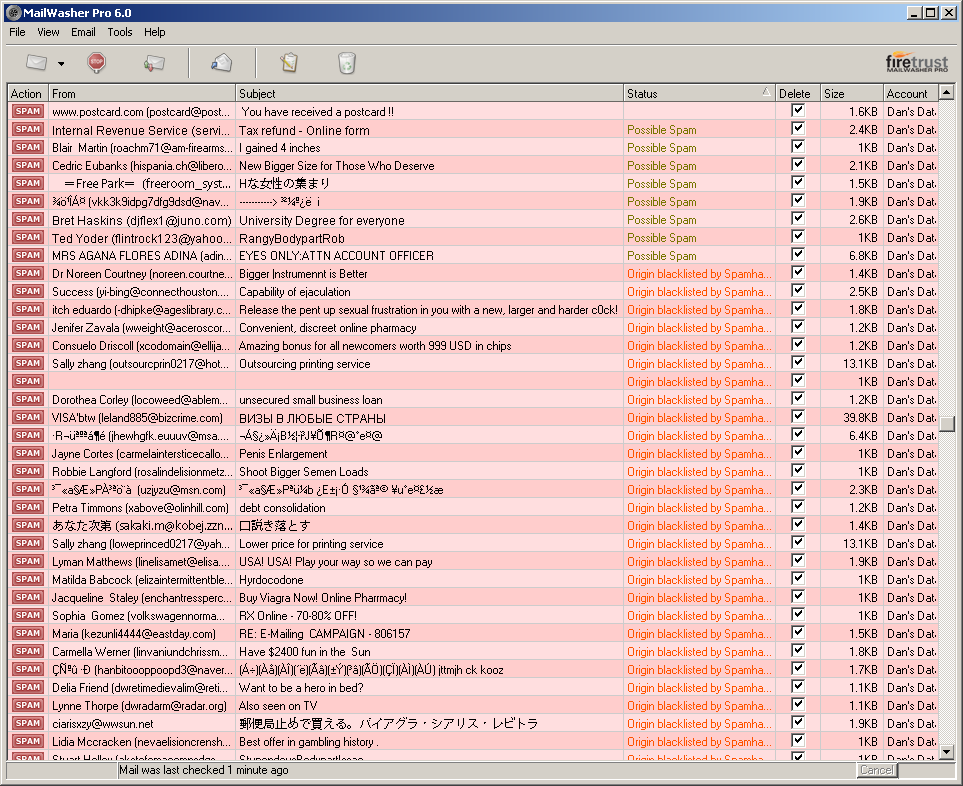
I know what you're wondering. You're wondering how many penis-pill spams I get per hour.

Well, gentle reader, it varies, depending on the time of day, from about six to about fifteen.

Luvverly spam, wonderful spam...

Per hour.

For some weeks now, the most popular ones have had subject lines that always contain a name, a word vaguely denoting bigness, and a word vaguely donating a dickish object, in various arrangements.

Some of the words for "big" are particularly entertaining. Actual subject lines I've seen include HoracioObviousFuckstick, BouffantPenisRosetta, and ClarkOverlargeBodypart (overlarge?).

(The penis I've been promised has also been described as "spacious". I'm sure "massive" has been in there, too - though "sturdy" and "fearsome", sadly, remain unused.)

The body of these messages always includes another of the three-word portmanteaux, followed by the URL of a Web site. There are many such sites - calormontes.com, grayskues.com, janeoplane.com, jeroneus.com, junioeres.com, planesjanes.com, razkoesu.com and slopitues.com were all promoted in one day - all registered with nonsense details to Some Dude In China.

All of them currently give you the same site (on, I think, the same physical server), promoting a product allegedly called "VPXL" from a company allegedly called "Express Herbals".

The VPXL/Express Herbals guys are the source of the vast bulk of my dick-pill spam, and I bet they're the source of most of yours, too, if you're not using an airtight spam filter.

(I've got three active e-mail addresses at the moment. The filtering on my iiNet account lets through zero spam but no doubt bounces a few valid messages; I only use it for a couple of mailing lists and occasional personal messages, though, so that's fine. I've also got an old Optus account I hardly ever use for anything, which is almost as well filtered; only a few spams a day get through there. And then there's dan@dansdata.com, messages to which get an "X-Spam-Tests-Failed:" header tacked on by m'verygoodfriends at SecureWebs who host Dan's Data, but are very minimally filtered by them, if they're filtered at all. Hence: Spamvalanche!)

Like the previous fake marijuana spams, the VPXL ones come to you courtesy of a botnet - a huge collection of virus-infected home computers on ordinary Internet accounts, identifiable because the sending IP addresses for the spam vary widely but always belong to some ISP or other that serves the home-user market.

The botnet this time is called Mega-D, and it has the interesting quality that its infected machines almost all seem to be in non-English-speaking countries. (The previous Storm-botnet spam overwhelmingly came from the USA.)

The VPXL dudes now seem to be shifting away from the three-word spams. In one 155-minute period earlier today I received:

One VPXL spam directly promoting http://polierin.com/; it came from a codetel.net.do IP address (Dominican Republic).

One VPXL spam with an "I'm Feeling Lucky" Google link (http://google.com/pagead/iclk?sa=l&ai=acetate&num=137336094&adurl=http://clinrie.com?446) that takes you to the spammers' site, in this case clinrie.com. The spam came from 58.19.232.188, a China Network Communications Group Corporation IP address.

One for jilafen.com from 80.146.114.212, a Deutsche Telekom address.

One for nidegnero.com from 201.19.74.24, a probably-Brazilian IP address.

And another variant, whose body text said "Pls Go ' www.redmehs ' dot com"; redmehs.com is VPXL yet again, registered to Chinese nonsense yet again. This one came from 68.118.233.112, though, which is an IP address belonging to Charter Communications in the USA.

There was exactly one spam that actually mentioned VPXL in the text of the spam - but it was malformed, with no actual link to anywhere you could buy the product. It came from 92.112.20.89, belonging to Ukrtelecom in the Ukraine.

And then there were a couple of the classic three-worders, one from Peru and one from Chile, both promoting zhbvdiaeg.com.

And then there was yet another variant, from a Colombian IP address and promoting http://geocities.com/kathydowns889/, which is a redirector page that sends you to neverwaitons.com, another facade for the Express Herbals server.

The runners-up in the dick-pill spam-flow are the "Canadian Pharmacy" type (the sites are usually subtitled "#1 internet online drugstore"). The most prominent products on these sites are, of course, always erectile dysfunction drugs. Which you almost certainly will not actually receive if you place an order.

In my 155-minute period I got one promoting marquitamontemurrodd.blogspot.com, which redirects to a Canadian Pharmacy site at putwish.com, which is registered to a pile of Chinese nonsense that closely resembles the standard VPXL-domain registration nonsense, leading me to suspect they're related. The spam came from 220.128.197.130, some Taiwanese mail server.

And then there was one that directly promoted canocaw.com, "Target Pharmacy", registered to more Chinese nonsense and also billed as "#1 Online Pharmacy Store", and looking much the same as the "Canadian" version. The sender was 84.108.33.6, belonging to Bezeq International in Israel.

Another one promoted tamilacyg.blogspot.com, which redirected to another "Canadian Pharmacy" at pha-cana.com, an unusually comprehensible domain name for these guys. More Chinese rego details; spam sent from 82.54.82.43, Telecom Italia.

And one promoting ruoedi.kiltyale.com, which is "World Pharmacy", which looks a bit different from the Canadian and Target varieties. Kiltyale.com is registered to marginally more real-looking Chinese details than the other pharma-sites, but the spam came from 190.156.83.182 in Colombia, which suggests the Mega-D net again.

And then there was one promoting the entirely genuine-sounding URL http://gbcdelmafhjk.filmplenick.com/?iafhjkxowptygzchcmbcdelm, which is a "Viagra + Cialis" site calling itself "VIP Pharmacy". Filmplenick.com is registered to a US address, so even though this was another spam from a South American IP address, I suspect it's not the same people as "Canadian" and "Target".

And then there was one for www.onthebob.com, a site that's regrettably down right now - one of only two pharma-spams whose promoted sites didn't work - and which is registered to pointless details in Brazil rather than China, suggesting that the culprit is different again. The spam came from 60.242.181.54, which is a TPG Internet IP address right here in Australia.

The other complete failure had the subject "Hydrocodone, Vicodin, Phentermin, we are 100% reliable pharmacy retailer cufqev21ph", and advertised gop.uhthclrenewed.com, which is down (so not quite 100%, I guess). Actually, the uhthclrenewed.com domain isn't even registered as I write this, so spamming about it would appear to be slightly premature. This spam originated from 66.228.248.134, belonging to the gloriously titled "Park Region Mutual Telephone Co. and Otter Tail Telcom" in the USA.

On top of these, I got one ad for pohfrensei.com, selling the entirely non-icky product "WonderCum". This is the VPXL people again; that domain is registered to more Chinese nonsense, and WonderCum and VPXL are often sold - or complained about - on the same sites. This spam came from a BT Total Broadband IP address in the UK, though.

(The VPXL people have also been responsible for "Elite Herbal", "Manster", "ManXL" and the delightfully understated "Megadik".)

There was also one quit-smoking spam advertising something called LiveFree at www.celarpo.com/f/. That's probably unrelated to the dick-pills people; the domain is registered to someone allegedly in the USA, and the spam came from 201.226.17.2, somewhere in South America.

I also got one sad little "RE: February 88% OFF" (the number varies - in one mail check a while ago I got eight different "discounts"...), allegedly from "admin@viagra.com", with a link to a broken redirector. Presumably that's the remnant of an older botnet, still spamming sporadically away with out-of-date info.

Along with all of the above, and not counting the spams not in English that I couldn't figure out, my 155-minute period netted me nine casino spams (including four copies of "RE ORDER Casino"), six offers of business loans, two counterfeit-watch spams, five counterfeit-other-things spams (four were in Asian character sets, but "Gucci" and "Tiffany" stood out in the headers...), two "offshore printing service" spams (I've been getting those for a while), one fake-lottery spam, two eBay phishes, and exactly one of those magical messages that's nothing but the bare minimum headers needed to get it to you, with no subject, To: line or body.

Yes, I have thought about just redirecting all of my mail through Gmail or something so that I won't smell this constant tide of manure any more - even if all it can do is slap up against my MailWasher deletion queue. I doubt Gmail filtering would be any worse than what I'm doing now - I may be manually scanning over the headers of my mail, but I'm sure I've failed to notice valid mail and deleted it anyway.

But there's a sick fascination to doing it this way.

It's interesting to see the sheer quantity of repeato-spam. You don't get to appreciate the magnitude of the problem - sucking up Internet bandwidth, server power and the money you pay for Internet access - if you hide behind a filter.

The current repeato-spam onslaught is, I think, created by the distributed botnet senders. Botnets are a great way to spam, but they have no way to coordinate their sending lists.

Spammers never prune their mailing lists anyway, and I do know that one should never underestimate the stupidity of spammers, but I think even the dumbest modern mass-mailing software ought to be able to avoid sending the same spam to the same recipient twelve times in one run. If you've got thousands of zombie PCs sending your spam independently, though, it becomes much harder to prevent the same recipient getting (essentially) the same message over and over and over in a short period of time, because none of the individual bots know which other bot has sent which message to which recipient.

This is probably why I got three copies in quick succession of "AGF has an exellent opportunity for you! Australia", plus one "AGF is a smarter way to money! Australia", three "New part time job - good salary in Australia", one "Work with us today - earn money today!", one "AGF company helping individuals in business online" and one "it is your new job possible!". All in the course of, I don't know, maybe three hours.

I suppose someone's dotty email-forwarding great-aunt might think this just meant these people were really really eager to find new employees. But super-repeato-spam like this, and like the three-word dick-pill tirade, ought to have some negative effect on the message's credibility to even the most cretinous of other recipients.

Another attraction of paying (at least a little) attention to incoming crap is that you get to see how much of it, as in this case, resolves to just a very few senders.

If someone found, and dealt with, in one way or another, just the VPXL spammers, the total volume of spam in the world might well drop by a double-digit percentage. It's not often that crime prevention has such a definite monetary payoff; since spam costs the world tens of billions of dollars a year, you could easily save a sum equal to the Gross Domestic Product of an African nation by shutting down just one major spam-group, as long as another didn't rise up to take their place.

And that might well not happen, if we establish just a little deterrent value. First World nations need to crack down on spam more effectively, and Third World nations need to realise that spammers are (a) rich and (b) probably all pudgy and easy to rob, 'cos they spend a lot of time sitting in front of a computer.

Legal prosecution would be good. But I'd settle for standover men.

"I bet that stuff you sell's given you a really big dick. Would you like to keep it?"

THIS legal threat, I'm less worried about

To be perfectly honest, I don't really care very much if someone rips off the pretty pictures I take of products and uses them for their eBay listings.

If you ask me for permission to use my pictures for commercial purposes, I'll cheerfully license them to you for a small fee.

But most people don't ask, of course. They just do a Google Images search and take whatever they want.

That doesn't actively take money out of my pocket. It just deprives me of royalties from someone who clearly doesn't want to pay royalties anyway. Which is why I don't very much care.

(Cue ISO Standard Piracy Argument in 3, 2, 1...)

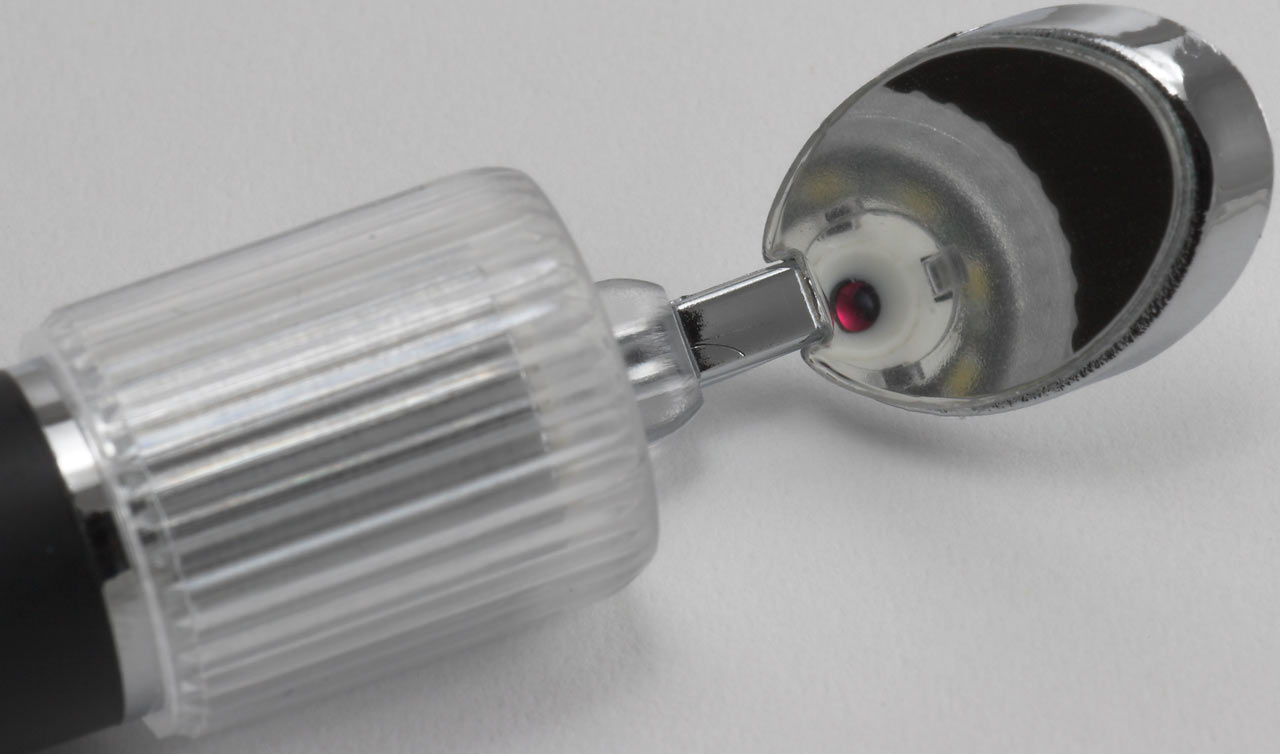
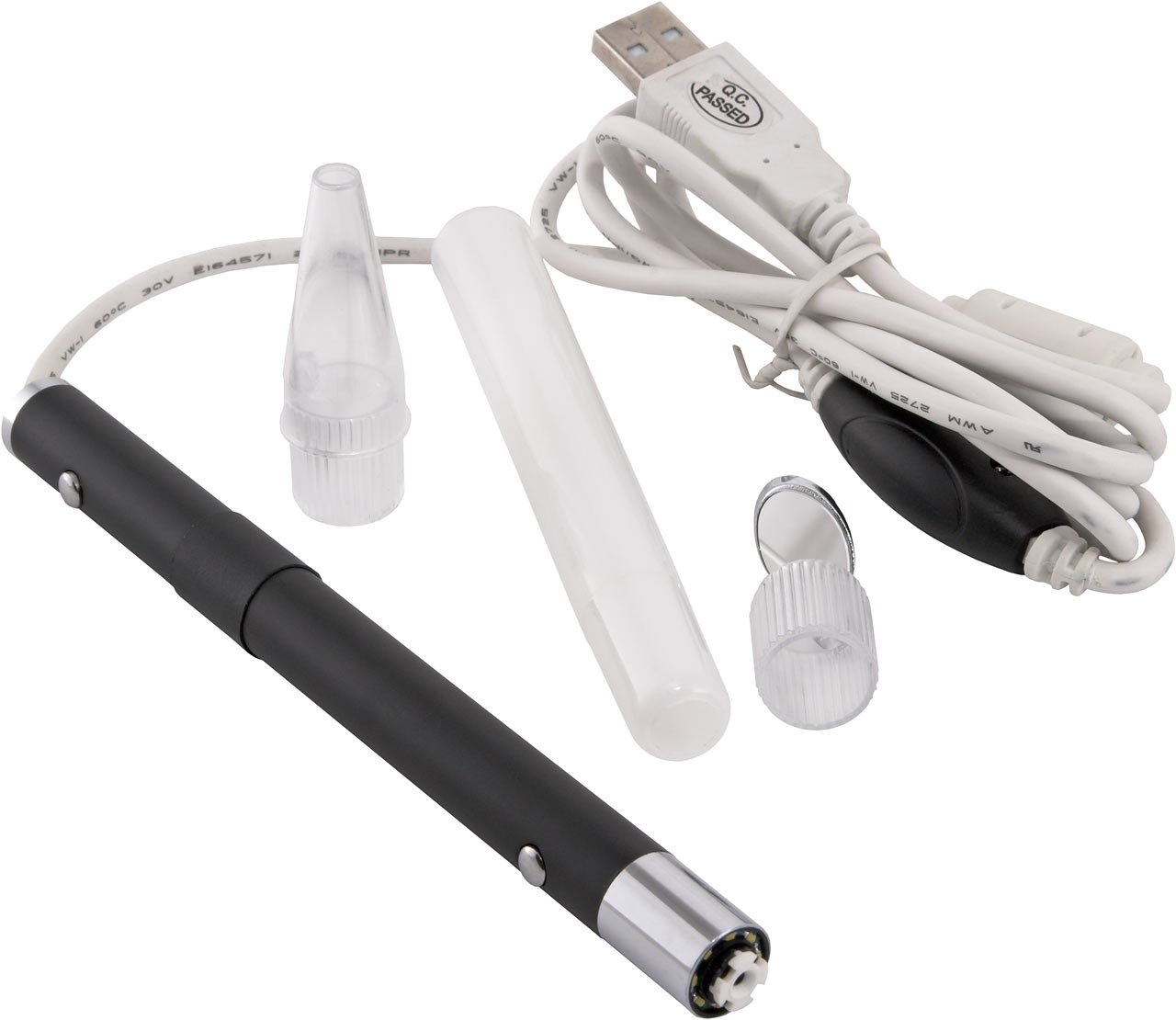
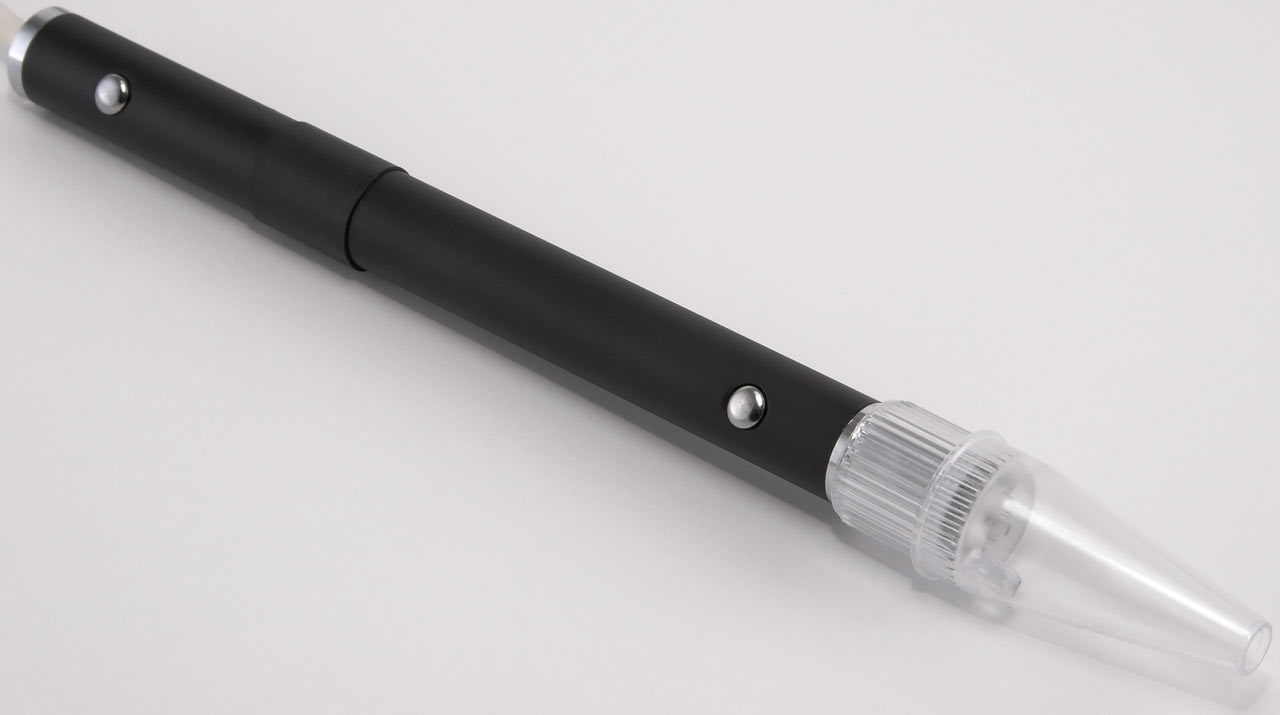
Anyway, a little while ago, I reviewed a pen-shaped close-focus webcam thing called the ETime Home Endoscope. It's a neat gadget.

There aren't many pictures of the ETime Endoscope online, so if you image-search for it, you'll get a bunch of my pics on the first page of results.

This, and the absence of any decent handout pictures from the people who make the camera, has made my pictures pretty much the only option for someone who wants to sell ETime endoscopes on eBay or wherever but (a) can't be bothered taking their own pictures and (b) doesn't want to pay for someone else's pictures.

Since I'm now signed up with eBay's Verified Rights Owner ("VeRO") program, though, all I have to do to get eBay to delete any listings that copy my stuff is send them an e-mail. A couple of days later, the offending listings will be kaput.

So every now and then, when a reader points out a ripped-off listing to me or when I find one myself, I do that.

I did that with one seller of the Endoscope a while ago. Their listings disappeared, and they didn't post any more that I've noticed. Apparently taking pictures of the stuff they sell cuts into their profit margins too much to make it worthwhile, or something.

The other day, I found that another eBay seller, "endoscopes.endoscopy", was doing the same thing. They appear to be under the impression that putting their own advertising text on top of my picture, and/or sticking three of my pictures together with some others from the ETime site, is enough to make the pictures theirs.

Even as I was typing this, the above PhotoBucket-hosted image mysteriously disappeared. Clearly the work of someone who's quite sure that everything they're doing is perfectly above board!

I saved it, though. Here's the top portion of their composite image, which contains no pictorial content besides my images and ones from the ETime site.

Their PhotoBucket page at the moment still contains several versions of the composite image. From the text on the variants, it would seem they're also listed on eBay as "usb.etime.pencams". And here, here, here and here are their direct copies of my images, except with the aspect ratio screwed up and text slapped on top.

Oh, and apparently they don't like people copying images from their own site about hockey! It would appear that people "who steal all our photos and ideas" are "punk asswipes"!

Couldn't have put it better myself, guys!

I'm speculating, above, about how these people's reasoning works, because it's kind of hard to figure it out from this:

Date: Sat, 16 Feb 2008 15:36:42 -0500
From: "usbscopes@gmail.com" <usbscopes@gmail.com>
To: dan@dansdata.com
Subject: removing our ebay listings

Dear Dan,

1) We don't appreciate you removing our ebay listings of e-time pencams off ebay!

2) We are an authorized ebay distributors of etime ehe pencams.

3) We didn't use any wording or images off your website!

4) If you have our listings removed again, We are hiring an attorney in Australia to take you into court. So please be prepared!

endoscopes.endoscopy

After sending me this, they listed another ten or so auctions with the same ripped-off pictures in them.

I told them the exact pictures they had copied, and that I took those pictures in my house, with my camera, for my review of the product. And I filed another VeRO complaint, and got all of the new listings pulled too.

Their cogent response:

Date: Sun, 17 Feb 2008 13:47:21 -0500
From: "Steven Jordan" <usbscopes@gmail.com>
To: Dan <dan@dansdata.com>
Subject: Re: removing our ebay listings

see you in court asshole

(...followed by the quoted text of my e-mail, which it seems did not make much of an impression upon them.)

I'm sure these guys are hopping on a plane from Florida right now. I'd better make some space on my calendar.

And yes, I'm aware that this could have been much, much funnier.

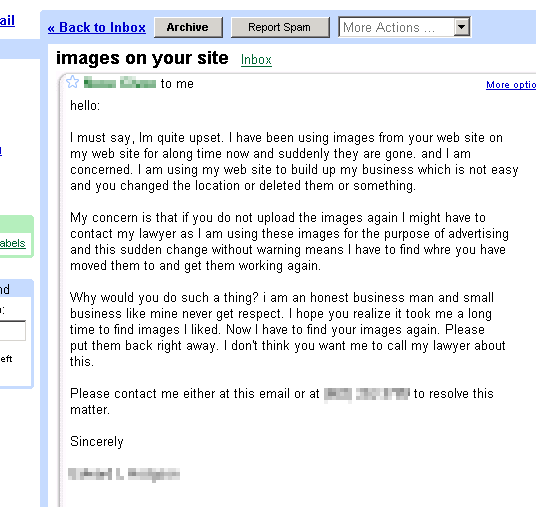
I must say, I'm quite upset.

But I have to work with what I can get.

The best Firepower can manage

Stephen Moss, CEO of Firepower International, hasn't breathed a word about suing me since starting our correspondence with that threat. But he sent me a report yesterday. It was apparently done for Firepower by a Shell laboratory in Germany.

Just like all the best scientific studies, this one is a big secret, so I'm not allowed to make it available for download.

The test was of some substance referred to as "Polyfuel Type #1", which was a thick gelly that had to be mixed with quite a lot of diesel before it became liquid enough to be poured into a fuel tank.

(Note - I originally said "jelly" in the above sentence, rather than using the non-word "gelly" which featured in the original report, specifically in the phrase "...which resulted in a gelly-like composition." I presumed that this spelling was just a typo or a German translation glitch or something, but apparently the use of the letter J in that word greatly angered someone representing himself as being from Firepower. He then contacted Blogsome and made a number of demands, one of which was that I change the spelling to what it said in the original. No problem, Mister Firepower Spelling Expert!)

Mr Moss tells me that this thick... gelly... was actually just what you get when the almost-on-sale "Firepower Pill" is ground up and mixed with diesel fuel, and it was presented this way to make the test easier.

Since the report says the gelly had to be pre-mixed, for some time, with ten litres of diesel before it was thin enough to use, this raises some obvious questions about what the heck the Firepower Pill actually is. I'm also personally willing to bet that if you crush one of the (rather small) Firepower Pills and put it in some diesel yourself, you will not get any sort of gelly, or even jelly. Mr Moss has offered me some Pills to test for myself; I may take him up on that, just to see if they do gel diesel, or petrol, or anything else.

Anyway, whatever the heck it was that they were actually testing did, according to this report which Moss says I may not distribute, reduce the fuel consumption of a Volvo FM12 truck, in a proper rolling-road drive cycle test, by about four per cent. Less on the highway cycle, more on the city-street cycle, where the engine was occasionally idling. Emissions improved, slightly, too.

So we've got a test of something that I have to trust Mr Moss was in some way related to the Pill they're now (almost) selling, on a large diesel vehicle (the Firepower Pill is meant to work on any petrol or diesel vehicle), which showed only a 4% fuel economy improvement, versus the 10%-to-30% claims Firepower make on their site and in their proudly presented anecdotal evidence.

In our correspondence, Moss has trotted out the "unburned fuel" fallacy, and stuck to it with some enthusiasm, even though Total Hydrocarbon ("THC"; quiet, you boys in the back row) emissions figures make clear that almost all of the fuel that goes into any modern engine is fully combusted.

The secret Shell report itself makes this clear. Here's a darn great diesel truck, consuming much more fuel per kilometre than a passenger car, yet even on the urban cycle where it's occasionally not moving at all (and before the magic Firepower substance was administered) it still only emitted 0.456 grams of THC per kilometre. It consumed 0.422 litres of fuel per kilometre on that test, which has a density of about 850 grams per litre, so it burned about 358 grams of diesel, and emitted less than half a gram unburned.

In other words, the worst it ever managed was burning 99.87% of the fuel that went into it.

Now, according to the report the 0.456 gram-per-kilometre THC figure dropped to only 0.389g/km when the Firepower concoction was added to the fuel; reducing THC emissions by 15% is a good thing, as long as there are no hidden downsides. But the notion that this reflects a more complete burning of the fuel which could have some perceptible effect on power or economy is ridiculous, since 15% of 0.13% is, to a first approximation, bugger all.

Mr Moss went on to favour me with the "catalyst" fallacy, which I have addressed on previous occasions, including the very first time my then-so-innocent eyes fell upon Firepower, back in 2006. In brief: The common fuel-additive claim that it makes the fuel burn faster (from the buyfirepowerpill.com site: "Treated fuel burns 25-30% faster..."), or more easily, is nonsense. Fuel in a modern engine already burns pretty much optimally; if it burns faster or lights more easily, all that'll give you is engine knock, which is a bad thing.

Mr Moss also had a go at the "engine cleaning" fallacy, and just when I was wondering if I perhaps wouldn't be hearing it, the "conspiracy theory" fallacy as well. And he reiterated his great fondness for anecdotes.

And that, plus this super secret report I'm not allowed to show you, is all he's got.

Tim Johnston, the Chairman of Firepower Holding Group, has been selling fuel pills with these same claims since 1992.

Mr Moss seems to be distancing his outfit, Firepower International, from Tim Johnston - he told me that "Firepower International is not owned by Firepower Group, I think some articles have made the mistake of assuming we are the same entity. Firepower International is privately owned by a collection of investors and owns the worldwide rights to the Firepower Pill."

(And interestingly, a reader's just pointed out to me that the firepowerinternational.com domain is actually registered to Stephen Moss.)

But Firepower International, or Group, or Whoever, have all engaged in conspicuous displays of wealth - sponsoring sports teams and, Mr Moss insists, actually buying the million-dollar Rolls-Royce he was until recently depicted next to on the buyfirepowerpill.com site.

So you'd think that at some point over the last several years they might have found the time to spend a measly hundred grand on used cars to hand, along with some Firepower Pills, to an automobile association or technical college or something for proper testing.

But no. The Australian Automobile Association say they'd love to talk to Firepower, but over the whole of last year Firepower have unaccountably failed to pick up the phone.

So that's it. The crowning jewel of Firepower's evidence is this one secret report from 2004, of a substance that resembles their Pills in no way whatsoever, and which found not even half of the smallest benefit that Firepower allege is commonplace in all sorts of vehicles.

Mr Moss keeps urging me to just try the magic Firepower pills in my own car, whereupon he says I'll be unable to deny the obvious power gains, if not the improvement in fuel economy.

But countless people - probably millions of people - have tried snake-oil fuel products in the past and been convinced of just those improvements, because they wanted to see them. They wouldn't have bought the darn stuff in the first place if they didn't think it was at least likely to work; that belief sets you straight on the train to a textbook case of confirmation bias.

Even if the product is something that's actively harmful at best, like Slick 50, you can find a long queue of people who'll swear, hand on heart, that it works.

You can also, of course, find a long queue of people who'll swear that using an electric fan in a closed room is deadly dangerous, that elves are real, or that a fence post near Coogee Beach was an apparition of the Virgin Mary.

(I have personally witnessed that last queue. But not Mary.)

The first principle of science, though, is that you must not fool yourself - because you are the easiest person to fool. If you do an unblinded, uncontrolled test like just dropping a pill into your petrol tank and driving around, you can very easily completely fail to get any closer to the truth than if your test involved throwing darts at a piece of graph paper.

We've been working on science for about the last 400 years, and it's really worked out quite well. If you're lucky enough to live in a First World country, practically everything you see, touch and do on a daily basis is either entirely the product of, or has been almost unrecognisably improved by, science.

And science is hard. But it's worth it.

It's long past time for Firepower to put up or shut up.

A few more Firepowery links

It's not just me and the Herald who've been paying attention to Firepower lately.

(Actually, I'd pretty much forgotten about them, until their CEO threatened to sue me yesterday.)

Here's a Webdiary piece that sums up the strangeness that is Firepower, including the previous versions of their fuel pill. All these years, and it still hasn't set the world alight.

Here's a piece on Gas Week that asks, among other things, why almost $400,000 of Australian taxpayers' money seems to have been handed over to these people. And here's Gerard Ryle, the Herald journalist, summing up the story as it stood early last year, on the Australian Broadcasting Corporation's Science Show. Firepower's science doesn't seem to have moved on in the interim.

Here's a piece about the Australian Automobile Association trying to get Firepower - or any of the several other, lower profile, fuel-pill makers active in Australia at the moment - to submit to proper testing. That was a year ago, and Firepower said then that they hadn't even noticed that the AAA had called. I wonder if they've answered the phone yet?

Oh, and much the same "results" that were presented to me in PDF form just yesterday were shown to Crikey a year ago, in great secrecy. Crikey weren't very impressed, either.

Big sites pick up the story!

M'verygoodfriend Joel Johnson at gadgets.boingboing.net could, I think it's fair to say, be more impressed with the CEO of Firepower International.

(I'm basing this assessment on the idea that "blowhard dickbag" is an insult. Do tell me if I'm wrong.)

Rob Beschizza of the Wired blog has also picked up the story, taking the time to Photoshop the Firepower logo a bit, and writing a disappointingly sober piece on the subject of Firepower-esque scams in general.

Oh, sure, it's all very sensible, Rob. But how are we supposed to take you seriously if you haven't called anyone a cockmonger?

Firepower's "results"!

And now, on to the "results" which Stephen Moss, the sue-happy CEO of Firepower, has commanded me to publicise, on pain of being sued for defamation.

Those results were presented in a generously proportioned PDF file which he attached to his threatening letter. He told me to make it available for download, and at no point did he complain about the fact that I did so - but apparently some OTHER person from Firepower decided to threaten Blogsome (not me, my blog hosts - classy!) with legal action for doing what the CEO told me to do, so now you'll find no link to the file here.

(If only I had some other Web site on which you might find more information about this...)

The PDF, mildly hilariously, has a line on the bottom of every page telling you it was created with the unregistered version of deskPDF PDF Writer, a piece of software which costs only $US19.95 to register.

I remind you that Stephen Moss is a fellow currently depicted on buyfirepowerpill.com as putting a fuel pill in "his" 2007 Rolls Royce Phantom LWB, a vehicle which costs $AU1,095,000 here in Australia, or 49,130 times as much as a registered copy of deskPDF.

Classy.

Aaaanyway, on to the Results!

Page 9 of the PDF alleges that the Firepower treatments actually did slightly raise the octane number of some fuel. This makes no difference whatsoever, unless you've got a car that changes its ignition timing when it's running on higher-octane fuel, in which case you should just be buying high-octane fuel in the first place. The Firepower treatments didn't manage to increase octane numbers by nearly enough to turn cheaper lower-octane fuel into the more expensive stuff, anyway.

(You can raise a fuel's octane count by adding all sorts of substances to it. I write about this in more detail in this post.)

Page 10 of the PDF contains a statement from a German laboratory that says Firepower additives did not do fuel any harm they could notice, and goes on to specifically state that it's making no claims about fuel consumption or engine life.

Page 13 claims that the "Singapore Institute of Standards and Industrial Research" found that Firepower treatments massively reduced all kinds of engine emissions, by (according to page 12) greatly reducing fuel consumption.

These results, if correct, make Firepower products far and away the greatest breakthrough in automotive science of the last twenty years, at least. Maybe the last fifty.

But since there is, yet again, not the slightest clue as to who at the abovementioned Institute did the tests, when, and how, and since Firepower have previously admitted that when they said tests were done "by Volvo" what they actually meant was they were done, um, on Volvo trucks (that result gets one line on page 25 of the PDF!), I remain unconvinced.

Honestly - giant fuel economy differences like this are the sort of thing you could test in any technical college. You could just send a free tube of fuel pills to every TAFE in Australia that has an engine on a test stand, and within a month you'd be sitting on a pile of beautiful replicated results that you could take to Toyota or whoever.

Even if Firepower's additives only turned out to reduce world oil consumption by 10% - an easy feat, you'd think, given the much larger improvements shown in many of their testimonials - that'd save something in the order of nine million barrels of oil per day.

At current oil prices, that's more than eight hundred million US dollars.

Per day.

And yet Firepower are still messing around with photocopies of photocopies from some guy in Oman, and sending lawsuit threats to some bloke with a blog who dares to wonder why they seem so interested in selling fuel pills in packs of ten to individual motorists, and so uninterested in grabbing their entirely fair half share of the $US300 billion per year they could easily be saving the world.

Fuel-pill companies, of course, always do this. They make their florid claims, they allude to lab tests the details of which are apparently secret, they say that testimonials are all the evidence they need, and they sell to whoever'll believe the flimsy evidence they offer, rather than putting together proper evidence and becoming richer than Queen Elizabeth.

Every time, they do this. Over and over. For the last hundred years, if not longer.

(They often come up with a conspiracy theory, too. I don't think Firepower have done this yet, but give 'em time.)

But let's get back to the Singapore Institute of Standards and Industrial Research (SISIR) report on Firepower's products.

When do you suppose that test was done?

Well, I can only suppose it was done before 1996, because that's when SISIR ceased to exist. But don't worry - I can totally see how those sloppy, unorganised Singaporeans might have still been publishing research reports on old letterhead a decade later.

Or was the SISIR report, perhaps, used as supporting evidence for one of the Firepower principal's several previous fuel additive companies, all of which made much the same claims but none of which, all the way back to the early 1990s, have amounted to anything?

I'm speculating, here, but that's what you have to do when all you're given is a big happy bar graph and the name of an institution that hasn't existed for almost 12 years.

Page 14 of the PDF starts a long series of accounts of alleged fuel economy and emissions improvements, sometimes presented as bald claims with no tracking information at all (apparently Firepower products did great things for "Railways, Minsk" in March 2006...), sometimes as anecdotes that are at least on someone's letterhead with a signature, and with the occasional "this additive didn't mess up the fuel" certificate thrown in for spice.

Some of these accounts do at least allege that some sort of proper drive cycle test has been done.

On page 15, there's a test allegedly by the Russian Ministry of Defence, saying a Firepower product worked on a T72 tank, with what looks like some sort of controlled test. Page 16 says someone called Professor Evgeny Kossov of the Research Institute of the Russian Railways found considerable improvements in a long-term test, which at least could have been properly controlled, on one locomotive. And then page 18 has a signed testimonial from someone in Oman attesting to massive fuel savings in a generator, with a description of what would be a controlled test if it were actually done, and if nobody cheated, and if the meters all worked right - but what am I going to do, call Hamed Salim Al-Magdheri's mother and ask her if her son's prone to lying?

And then, on page 21, there's a testimonial, dated November 1999, from a Lieutenant Colonel in the New Zealand Army. It's a bit funny that they left that in, since the New Zealand military is one of several major organisations which has said they actually have no record of ever having any connection or contracts with Firepower.

I suppose some bloke in the Army might have bought some fuel treatment stuff himself and formed the opinion that it worked without telling anyone else - but many thousands of people have done the same thing over the years with many hundreds of other fuel treatments, none of which turned out to actually work. So all this adds up to is yet another scienceless testimonial.

(The other companies that denied connections with Firepower were Caltex/Ampol, BP, General Motors and the Australian military, none of whom are mentioned in the "results"... any more.)

On page 22, I thought that someone who glories in the name Calliope Sofianopoulos (and is a translator, by trade) claimed that Firepower products significantly improved the fuel consumption and exhaust gas composition of three taxis.

I was wrong, though - as Calliope points out in the comments, below! She actually just translated that document, and the geniuses at Firepower decided to uphold their reputation for fanatical devotion to accuracy by just scanning the translation, complete with her letterhead, and sticking it into the middle of their Results File.

Who actually did the taxi tests? Who knows?

We have names for three Greek taxi drivers and the make and model of their cars, and we've got magnificent fuel-consumption and emissions numbers. But that's all. The actual testers remain a mystery.

Did the anonymous testers do drive cycle tests to validate the fuel consumption figures? 'Course not. Why should they? But if they haven't, then nobody should use the results as evidence that the product works, because it is not in fact anything of the sort.

On page 23, some organisation called "Labtest Hong Kong" apparently also thought that just driving a car around was an adequate test, which I really must repeat yet again it is not, even if the test is blinded so the driver doesn't know when you've added the supposed fuel enhancer. That did not appear to be the case for this test, which raises some questions in my mind about what kind of "lab" that joint actually is.

Then there's one from the Philippines on page 29 that has an actual static test of a truck as well as the usual useless driving around, and claims a 16.43% fuel economy improvement - though they for some reason tested it with the engine idling, which doesn't strike me as very useful. I suppose we've got to take what we can get, though.

And on it goes. But who knows what any of these tests, even the better-looking ones, actually are?

I know I'm not going to call Directory Assistance in six countries to try to find the people apparently associated with the higher-quality tests and grill them about what they really did. Firepower should be the ones presenting multiple proper tests from clearly identified and readily contactable authorities. And they shouldn't be presenting them to me; they should be presenting them to all of those big fuel and car companies with whom they said they had such impressive deals.

If you've got a super fuel additive that does the things Firepower's stuff is supposed to do, and if you've got enough money to sponsor sports teams and show off a million-dollar Roller, then obviously you've got enough money to get proper tests done by proper, respected, well-known organisations - in Australia, I'd start with the NRMA and the RACV. And then blammo, billions of dollars are yours.

But Firepower are not, of course, going to do that. Because Firepower are just the latest in a very long line of companies making stuff to put in your fuel that... doesn't really do anything.

They say the exact same things as many of their forebears.

I mean, look at page 5 of the PDF. It says "when the fuel is burned in the combustion chamber not all of the fuel is used and a proportion goes out the exhaust...".

This is true, and a frequently-heard claim from fuel additive manufacturers. But the actual unburnt fuel fraction for a modern engine is 2%, at the very most.

So there's almost nothing to be gained there.

Apparently the Firepower products work "by burning more of the heavier elements of your fuel, increasing power and fuel economy". But this is impossible; if any significant fuel energy were actually left in the exhaust from a normal engine, it would either burn the car's catalytic converter off in very short order, or cause the car to miserably fail any modern emissions test. Firepower claim fuel economy gains of well over 10%; well over 20%, in some of the testimonials. But the only mechanism they provide by which this can happen can give you only a couple of percentage points, and probably less.

Fuel additive companies always take advantage of people's vague knowledge that engines are only thirty-something per cent efficient, and use it to make people think that sixty-something per cent of the fuel energy is readily recoverable, because the fuel isn't burning completely, or fast enough, or in the right pattern, or something.

Engines are actually so inefficient because, although the fuel burns very completely, there are inescapable thermodynamic reasons for lots of the resultant energy to be lost as heat. In brief, unless you make an internal combustion engine that runs a lot hotter, you can't make one that's a lot more efficient.

There have, as I said, been many "fuel pill" products before, one of which was, I remind you, actually sold by the same guy who's the chairman of Firepower now. The case study of the discredited BioPerformance Gas Pill on Tony's fuel saving gadget site (to which I have been linking rather a lot, lately...) is informative, here; it appears to be very similar to the Firepower pill in composition, claims-made and backing evidence.

If Firepower want people to take them seriously, it seems to me that they should have proper independent tests done on their supposedly miraculous technologies, rather than just touting all of the contracts they've supposedly signed with people who haven't necessarily done any more due diligence than have Firepower themselves.

If Firepower substantiate their claims with proper tests, I'll be the first to recant my skepticism and sing their praises. And buy the pills, too - though I imagine they'll be in short supply for a while, what with every motorist on earth being eager to get hold of them.

While Firepower insist on acting exactly like a long line of previous fuel-pill hucksters who turned out to be selling worthless products, though, I cannot in good conscience treat them any other way. No matter how much they threaten me.