The explosion'll get you before the poison does

I just now belatedly noticed that Derek Lowe has written another of his occasional, but always entertaining, posts in his Things I Won't Work With category. (See also.)

This one's about triazadienyl fluoride.

You know how sometimes when you react one dangerous substance, like chlorine, with another dangerous substance, like sodium, you get something perfectly harmless, like table salt?

Well, that's not what happens when you react fluorine with hydrazoic acid.

21% of US squares triangular, survey finds

When I read The Barna Group's "Most Americans Take Well-Known Bible Stories at Face Value" (which, yes, was a year ago, but it's not as if there've been a lot of great breakthroughs in the field since then), I was not entirely surprised to read that "Americans ... remain confident that some of the most amazing stories in the Bible can be taken at face value."

Given that, as I've previously mentioned, the USA appears to be a country in which 21% of the atheists believe in God, it's not surprising that - to pick one example from the Barna survey - 64% of Americans (or at least of the Americans that the rather preachy Barna Group surveyed...) believe that Moses literally parted the Red Sea.

This, however, is definitely one of those situations where it would have paid for both the people doing the survey and those writing stories about it - presuming they didn't all just have an axe to grind - to sit down for a probably-unavailable minute and have a little think about exactly what their findings meant.

Since it would appear that they didn't, let's do it ourselves, shall we?

Look at that 21%-of-atheists-say-they're-theists thing, for example. This turns out to be, so far as I can see, an actual, fair, genuine result. 21% of people who clearly said they were atheists also clearly said they believed in a "God or universal spirit".

That finding is from a Penthouse Pew Forum survey, which I consider rather more reliable than a Barna one.

Pew, you see, make their methodology and detailed results freely available. There's a PDF, here, that shows you the actual survey questions, next to the results.

On page 27 of that document, there's what looks to me like a very fair way to quickly find someone's religious affiliation or lack thereof, which includes a re-questioning for people who've been given the final options "atheist, agnostic, something else, or nothing in particular" and chosen the last option, to make sure they actually want to be "nothing in particular", and not atheist or agnostic.

You can never make a survey question perfect; in this case there's the problem of people who, like me, hold the considered opinion that gods do not exist (atheism), but accept our own fallibility and thus admit that we might be wrong (agnosticism), however improbable that may be. We therefore tick the "atheist" box, but if later on we're asked whether we think there's the slightest possibility that gods may exist, we'll say yes, like an agnostic.

But the Pew survey is about as good as a quick multiple-choice test is ever going to be.

In the rest of the main "topline" document they roll all of the Unaffiliateds together into one line, which presumably explains why seventy per cent of that category actually report belief in a God or universal spirit (page 44), and 36% of them (page 45) say they're absolutely certain that said entity exists, neither of which beliefs are at all compatible with atheism or agnosticism.

You can get a nice detailed separate table that breaks down all of the religions (PDF), though. That table shows you that 515 people, 10.2 per cent of the 5048 "Unaffiliated" respondents, said they were atheists.

Taken all together, this indicates that the Pew Forum aren't getting their "21% of atheists believe in god" result by subterfuge.

Pew's main "topline" document doesn't break Unaffiliated out into Atheist, Agnostic, Secular Unaffiliated and Religious Unaffiliated in its tables, presumably to make them clearer. But it does not appear that they're pulling a statistical fast one by, for instance, rolling all of the responses from Unaffiliateds together and then just declaring 10.2% of those responses to have been from atheists, even if none of the atheists actually reported belief in a deity.

No, it really does seem that about 108 people that Pew surveyed clearly declared themselves to be atheists, and then clearly professed belief in a god of some sort.

That doesn't, of course, make a blind bit of sense. Atheism is not a religion, just as baldness is not a hairstyle and no car in the driveway is not a kind of car in the driveway. But it's not the survey-givers' job to educate people about terminology. If you want to say you're an atheist who believes in a god, they'll write your answer down like everyone else's, even if that answer indicates that you're ignorant, nuts or a prankster. Fair enough.

Now, let's look at the Barna Group's survey.

Oh, wait a minute, we can't. They'll be happy to sell us umpteen books about being a better Christian or their copyrighted Christian Leader Profile test, but I can find no trace on their site of even the opportunity to buy a copy of any of their actual survey questions and results.

So now we're in the woods. Who knows what questions Barna actually asked, and what answers people actually gave?

With the right survey, you can get people to say pretty much anything you want. You can even influence their beliefs. ("What effect would it have on your vote if you were to discover that Candidate Smith is a child molester?")

Like Sir Humphrey persuading Bernard that he both supports and opposes reintroducing conscription, the framing of the questions makes all the difference. Especially when you're asking people about things that they don't actually think about much, or even care about much, like whether David actually killed Goliath.

As anyone working in this field knows, you have to take considerable care, even if you're scrupulously honest, to make sure that the meaning of your questions, and the meaning of the respondents' answers, is clear.

Stop people coming out of a church, for instance, and ask them if they believe in the Immaculate Conception. Most of them - Catholic or Protestant - will probably say that they do. So you can tick down ninety-whatever-percent on your survey and then issue a press release saying that belief in that doctrine is very strong, hurrah.

What most of the people will have thought you were asking, though, is whether Jesus was born of a virgin. The Catholic Doctrine of the Immaculate Conception actually states that Mary was born free of original sin, on account of how Jesus could not be incubated in the wicked womb of a normal woman, and if she weighs more than a duck she's a witch.

Your average rank-and-file dozes-through-the-sermon churchgoer is somewhat unlikely to know this. Your non-churchgoing ticks-the-box-marked-Christian person on the street is very unlikely to know.

So if I were running a survey like the Barna one, then apart from making sure I released the questions and not just digests of the alleged answers, I'd also make very clear exactly what stories I was asking about, without just using common names that people often misinterpret.

(To be fair, the Barna survey probably generally did that; there's not a lot of room for error when you're asking about stories like Jonah and the whale or Daniel and the lions' den.)

But I'd also scatter in a few Bible-ish stories that were actually made up just for the survey. Jesus... blessing the fields... of the Moabites, say.

If respondents say they believe stories that not even Dan Brown ever mentioned - as, I bet, many of them would - then clearly people's statements of belief in the other stories should be taken with a large grain of salt.

The Barna survey press releases do, however, tell you something about George Barna, who is I think representative of a peculiar movement in American Christianity. This press release about the Bible-story survey manages to restrict its preachiness to a "Reflections on the Data" section, but the one I mentioned earlier contains a number of places where George expresses the strangely popular, and reliable-like-clockwork, belief that Christianity in the USA (and elsewhere!) is "under siege".

"...While the level of literal acceptance of these Bible stories is nothing short of astonishing given our cultural context...", for instance, and earlier on "Surprisingly, the most significant Bible story of all - 'the story of Jesus Christ rising from the dead, after being crucified and buried' - was also the most widely embraced."

Outside observers may find this slightly bizarre, since Christianity in the USA is obviously massively dominant...

...and Christians who don't believe (or at least say they believe) that Jesus was resurrected are pretty hard to find.

But there's also no shortage of talking heads eager to opine that the evil forces of secularism are constantly gaining ground in their unholy mission to re-name trees with lights on them, and so on.

To be fair, Barna goes on to say (in the third person...) that the real problem is that all of the nominal Bible-believing which his who-knew-what-it-asked survey discovered doesn't translate to much in the way of actual "Christian" acts. So I suppose that's the grain of rationality within the "Christianity under siege" belief; that lots of people say they're Christians, but you can't find a lot of true Christians among them.

But, again, this doesn't seem very surprising to anybody who accepts the not-too-hard-to-support point of view that Christianity is just another major religion, which the overwhelming majority of adherents use not to lead them into the light, but to justify whatever they wanted to do anyway. Yes, believing the Bible ought to lead to defined-by-Barna-as-"Christian" behaviour. But no remotely sensible reader of the New Testament could possibly conclude that Jesus would find it acceptable for you to drive a Lexus to church - and yet "prosperity theology" has sprung up to bridge the gap.

Similarly, the idea of karma ought, you would think, to lead people to good behaviour. But instead, your average Hindu-in-the-street is quite likely to believe that karma means that miserable beggars, children raped by their parents, or any other unfortunates you care to name, are suffering righteous punishment for bad deeds in a past life. And, again, that the prosperous deserve their prosperity, for surely god(s) would not have given the rich so much money if it were not their just reward.

All of this makes sense, if you don't think there's One True Religion that should guide its followers to be obviously better people than those who've foolishly been raised in some other, fictional faith. But to people like Barna, who believe that their particular religious variant is that one special phone-line to God, the entirely ordinary behaviour of their fellow believers can only be explained by the evil actions of external forces, besieging the chosen of God and leading - nay, forcing - them away from the righteous path they'd otherwise obviously choose to follow.

Adding fake-Bible-story questions to the survey could have helped Barna out, because it would have given him a chance to claim that people of disappointing morality who believe that David fought Goliath, but also believe that Josiah, um, washed the Pharaoh's feet, clearly do not in fact know much about Christianity and could therefore not be expected to be particularly righteous.

Adding fake stories, though, could also have measured the credophilia - indiscriminate collection of beliefs - that lies at the core of a lot of religions.

If your religion says that faith by itself is a virtue, you shouldn't be surprised if you end up with a bunch of people who'll believe almost anything. And who'll think that holding those beliefs, without doing anything else in particular, is enough to get you into heaven.
Sooper sekrit site location

Dansdata.com has a new server, but it's having a minor failure to proceed; I can't put any new pages on it.

The old one is still accessible, though, here. It's got a couple of articles on it that haven't made it to the new server yet.

UPDATE: Thanks to the helpful people at SecureWebs, the standard site is now working properly again. The above direct-IP-address old server won't be getting any more new pages, and will probably go away some time soon. Feel free to keep going there to confuse my ad providers, if you like.

Empower your piston pressure!

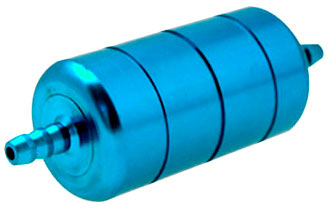
Car-enhancing thingamajig

I am indebted to the reader who pointed me to the eBay listing for this item.

As he said, the listing really does tell you everything you need to know about it:

Car Drive Power Igniting Ignite Engine Air Power Plus

Descriptions:

* Most Hi-Tech, Quality product;
* Power up your car engine;
* Power and smooth driving;
* Auto adjust electronic frequency system, to fasten super plugs igniting the engine accurately within the shortest time, and also to empower the piston pressure to its maximum emplosion;
* Size: 70 x 25mm (L*D)
* Weight: 70g

From the description, you'd think it was meant to be some sort of high-energy-ignition doodad. But it's got a hose barb on either end, so perhaps you're meant to put it in your fuel line.

Or maybe the windscreen-washer hose.

I'm so confused.

(The listing also says "The photos are just for illustration purposes only", which I think you'll find is the usual purpose of photos in eBay listings. But perhaps it means the thing they send you will actually plug into the cigarette lighter socket, or something.)

Organise your Viking funeral before it's too late!

In the comments for this old Respectful Insolence piece, one less-than-deep-thinker made the mistake of announcing that he sometimes actually told patients "This stroke is God trying to speak to you..."

This attracted a certain amount of snark. If a god can't think of a better way to communicate with you than by bursting a blood vessel in your brain, I'm not sure I want to visit an afterlife run by him.

I hope, if I ever find myself in a similar situation, to have the presence of mind (somewhat dependent upon the presence of functional brain cells...) to say "Yes, you're right. There's clearly not much time left for me to die heroically in battle."

(If I just nodded and then yelled "BLOOD FOR THE BLOOD GOD!" while lunging at the doctor with a letter-opener, he probably wouldn't get the joke. Besides, I'm definitely more of a Nurgle kind of guy.)

Zwei Keyboarden

I've accidentally become some sort of Internet authority on clicky IBM-type keyboards. So I've been receiving a pitter-patter of e-mails about the latest products from Das Keyboard.

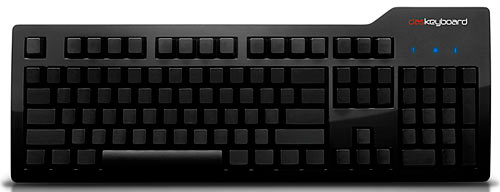
Das Keyboard originally sprang to nerd-fame with their first, eponymous model, which was notable for what it lacked rather than what it had:

There was nothing printed on the keys.

Personally, I think that's goofy. I don't have to look at the keys when I'm typing, but that doesn't mean I can always remember which key has % and which has ^, especially after the second martini.

I suppose an un-marked keyboard could be of some value as a training aid, and it certainly does have a unique aesthetic appeal. But if you haven't memorised all of the keys, including the used-once-in-a-blue-moon symbols, then to avoid having to just guess when you need to type something unusual on your blank 'board, you'll have to hang a picture of a normal keyboard on the wall.

(I can, by the way, type something in the order of 80 words per minute, which makes a very impressive 900-odd clicks per minute when I'm using a buckling-spring keyboard that makes two clicks per keystroke. I brought my own keyboard to work back when I worked for the Dark Lord Murdoch, and enjoyed an entirely unjustified reputation for doing exactly what I was supposed to do.)

The original Das Keyboard didn't have much to commend it besides its slick appearance, because it was a rebadged Keytronic membrane 'board. It was about as good-feeling as a membrane keyboard can be, but it cost well over twice as much as the printed keyboard it was based on.

Then they made the Das Keyboard II, which was a proper clicky keyboard with discrete keyswitches. Except they didn't really "make" it; I think the II was another rebadge job, this time based on the Ione Scorpius M10. Which, once again, was cheaper than the Das Keyboard version.

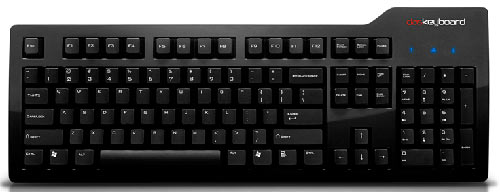
Time marches on, and Das Keyboard now have two mechanically-identical keyboards. The first is the "Ultimate"...

Das Keyboard Ultimate

...which is another blank 'board, and the second is called the "Professional"...

Das Keyboard Professional

...which - gasp! - has normal printed keys.

(This reminds me of the Penguin caffeinated-mint company, and their "decaffeinated" mints.)

I'd be happy to review a Das Keyboard Professional, but the last time I dealt with Das Keyboard they were apparently playing she-loves-me, she-loves-me-not, in a variant called we'll-tell-Dan-we're-sending-him-a-keyboard-for-review, no-we-won't, yes-we-will...

This lengthy process ended on "no-we-won't".

I don't think they're actually trying to hide anything - reviews of the new models have been very positive. The only real question is whether, aesthetics aside, you can get something just as good for less money.

It seems that the Ultimate and Professional actually are the first Das Keyboards that you can't buy under another name. If they are still rebadge jobs, I can't find the original models this time. The new 'boards have Cherry keyswitches, so I suspect they're being made by Cherry. But nothing in the Cherry keyboard lineup looks like the new Das Keyboards; there's a "smart card keyboard" that looks a little like them (it has the same projection in the top right corner, which is where the smart-card reader lives), but the key layout is different.

The new Das Keyboards aren't cheap. They list for $US130 in the States, but they're about as big and heavy as an IBM buckling-spring keyboard, so you probably don't want to buy them from overseas. Here in Australia, you can get them from Aus PC Market for $AU198 delivered to anywhere in the country; Australian shoppers who'd like to order the unprinted Ultimate can click here do so, while the printed Professional is here.

The current exchange rate actually makes the keyboards a little cheaper than the US price; as I write this, 198 Australian dollars is only about 122 US dollars, and the Aussie price includes delivery. And any clicky keyboard is likely to last a long time, so a couple of hundred bucks isn't really that much to spend.

(Note that currency exchange rates are unusually variable at the moment, thanks to the financiapocalypse currently sweeping the world. If you're reading this only a month or two after I wrote it, don't be surprised if exchange rates are vastly different.)

There are indeed, however, other clicky-keyboard options.

A few years ago, almost nobody was making clicky keyboards any more, but there's been a resurgence lately. Keyboard connoisseurs are used to fossicking through new-old-stock dealers, used 'boards on eBay from sellers of variable honesty, and of course Unicomp. But there are now a few other companies making keyswitch keyboards.

The most impressive "reborn" keyboards on the market today, if you ask me, are CVT's Avant Prime and Avant Stellar. They sell for $US149 and $US189 respectively, but that's because you can remap almost every single key, and also bind macros to arbitrary keys. Actually doing this is less than totally straightforward, because the CVT 'boards are clones of the old Northgate OmniKeys, and work the same way.

There's also Deck, who made the little keyboard I reviewed a while ago. They have a full-sized IBM-layout 'board called the "Legend", but it's $US149 ex shipping. (The little "Deck 82", like the one I reviewed, is $US99.) All of the Deck 'boards have LED backlighting, though, which really is quite fun.

(On the subject of mini-keyboards: If you're looking for a small decent-feeling non-clicky membrane keyboard, you could also check out the "Happy Hacking Keyboard", which has been available in several different models, even including a blank-keytop version. The only one available now is the $US69 "Lite 2", though.)

There's also Ione (or iOne, or whatever they want to be called), the makers of the Scorpius keyboard that was rebadged as the Das Keyboard II. They're still making the Scorpius M10 It has no fancy features at all, but can be had for fifty US bucks, which is hard to beat.

As I write this, there are three Amazon reviewers complaining about Scorpius keyboards with lousy build quality, but other reviewers specifically mentioned how well the keyboard was made, so I'm not sure what's going on there. Nobody seems to sell the M10 here in Australia, so I don't anticipate getting one to play with any time soon.

SteelSeries have two non-clicky discrete-keyswitch keyboards. That's what you want if you're after good tactile feedback - which lets you type faster and with less effort - but don't want a 'board that makes a racket. Their SteelSeries 6G lists for 99.99 Euros (about $US125, as I write this) plus shipping, and their SteelSeries 7G is 129.99 Euros. The main difference between the two is that the 7G has audio connectors and controls and apparently lets you press every key at once without any being lost, while the 6G has a more normal eight-keys-at-once buffer, and comes with a bunch of grey keytops that you can swap in to make important keys stand out.

There's also the Gigabyte GK-K8000, which is a bit unsightly but has Cherry keyswitches, a bunch of extra programmable keys, and onboard USB audio. It apparently lists for $US113, but doesn't actually seem to have quite made it to the shelves yet.

Mac users might like to check out the Matias Tactile Pro, which resurrects the old Apple Alps-keyswitch keyboards. The Tactile Pro version 2 sells for $US149.95, plus at least $US20 shipping.

If I were shopping for a clicky keyboard right now, my first stop would be eBay, to see if someone within inexpensive-shipping-distance of me had a decent-looking buckling-spring IBM 'board, or maybe something with the classic Alps keyswitches. If you're in the USA, you're very likely to be able to find a buckling-spring or discrete-keyswitch keyboard with many years of service left in it for less than fifty bucks including delivery. Clickykeyboards.com and Unicomp are excellent options for US shoppers, too.

If you're somewhere like Australia, though, you'll probably be waiting a while for your saved eBay search to turn up any options, and shipping prices for battleship keyboards from overseas will be painful.

Now that keyswitch keyboards are normal retail items again, you might as well just get yourself something like the Das Keyboard Professional. It won't cost you any more, you'll get a local warranty, and you'll probably be delighted.

Computing the volume of a wubble

Meditative Charley-loaf

We have not yet completed the full successive approximation needed to accurately measure Charley's volume, and this irregularly-shaped tub may or may not allow for more precise computation.

Charley in tub

He sat in there perfectly happily for some time, though.

Nightmare spider, now only $950!

The Phoenix spider-bot I mentioned earlier this year is now available as a (rather expensive) kit!

The kit costs $US949.99 ex shipping, which would be outrageous if all you got were the mechanical parts and R/C gear. But you also get a pre-programmed microcontroller that ties the bot's actions together, allowing you to control it with a wireless PlayStation controller, which is also included.

So it's not a Crabfu-type "robo-puppet", where leg movement is tied directly to stick movement. It's more like a normal radio-controlled walker, but with far more freedom of motion, including a variety of gaits.

And it can still play with boxes.